There are many things in life we can replace. Time is different. Once a moment has passed, we cannot bring it back.
Our time holds everything that matters to us: the work we want to finish, the people we care about, the responsibilities we carry, and the things we hope to experience. Using it carefully means making room for those things, including rest.
Yet some of our time disappears into a familiar pattern: remembering something, postponing it, forgetting it, and eventually rushing to put it right.
“I’ll pay that bill tomorrow.”
“I need to renew my passport.”
“I should recharge my mobile before the plan expires.”
At the moment we think these things, we fully intend to do them. Then a call arrives, work gets busy, or something else needs our attention. The thought slips away.
Nagping began with a personal desire to make better use of time and follow through on more of the things we intended to do. We wanted a simple way to give everyday responsibilities a place to live and a nudge when it was time to act.
Researchers have a name for remembering to do something later: prospective memory. It is the ability to carry out an intention at a future moment, such as making a call or attending an appointment. Remembering what needs doing and remembering it at the right time are different challenges.
Interruptions can make this harder. Research by Rahul Dodhia and Robert Dismukes found that an interruption creates another memory demand: remembering to return to the task we left unfinished. Their experiments showed how abrupt interruptions and competing demands can contribute to forgetting to resume that task.
Think about opening a bill, answering a phone call, and then moving straight into your next meeting. The bill still matters. But the moment that would have prompted you to pay it has passed.
External reminders can help. In experiments published in Consciousness and Cognition, researcher Sam Gilbert found that using reminders improved performance on tasks involving delayed intentions. The research supports a practical idea: giving an intention an external cue can help us follow through instead of relying entirely on memory.
That idea is central to nagping.
You capture something you need to do, choose when to be reminded, and decide whether you want repeat nudges. When repeat nudges are enabled, the reminder can return at your chosen interval, giving an unfinished task another opportunity to get your attention.
This matters because seeing a reminder and being ready to act are not always the same thing.
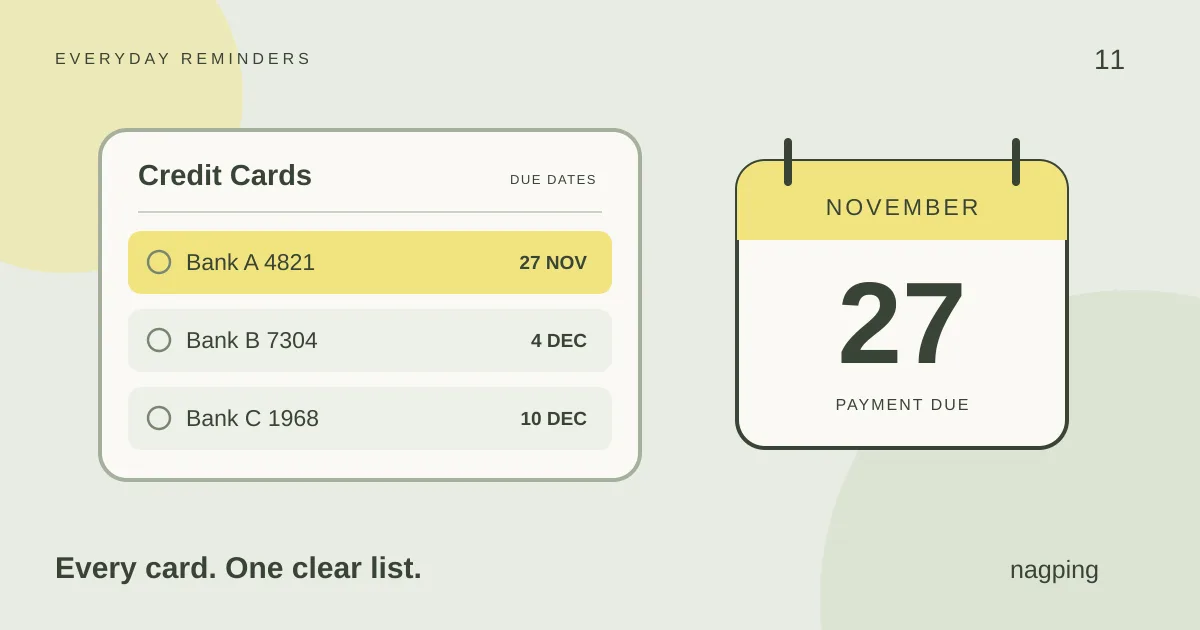
A bill reminder might arrive while you are cooking. A passport reminder might appear when you do not have your documents nearby. A mobile recharge might need to wait until you finish a conversation.
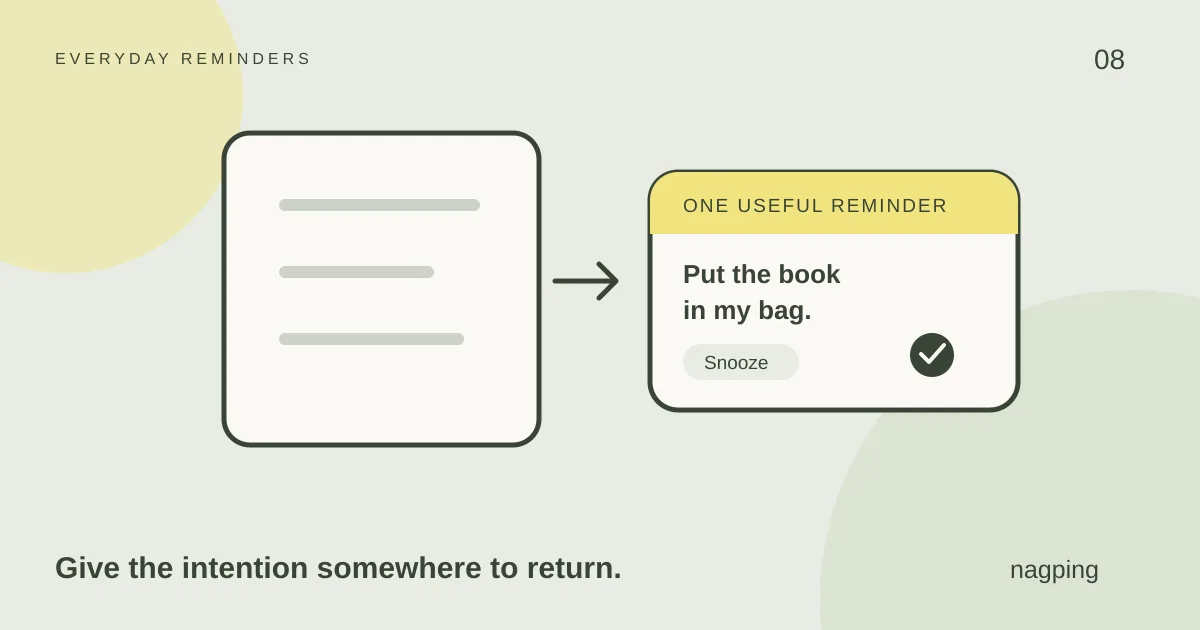
Nagping gives you a way to respond to those moments. Snooze when you need a short delay. Reschedule when the task needs a different time. Mark it done when you have finished.
A specific new time gives the task somewhere to return. “Remind me at seven this evening” is a clearer plan than “I’ll remember later.”
The wording of a reminder matters, too. Give yourself an action you can recognise immediately:
- Pay the electricity bill at a time when you can access your payment details.
- Check passport renewal requirements early enough to plan the next steps.
- Recharge my mobile before the current plan expires.
- Book the appointment when the relevant office is open.
For something larger, choose a manageable first step. “Renew my passport” may involve checking requirements, gathering documents and submitting an application. A reminder to “Check which documents I need” gives you a clear place to begin.
You can find more examples in our guide to getting started with nagping.
Repeated nudges should also fit your day. Choose a frequency that helps you respond, use quiet hours when you need uninterrupted time, and reconsider reminders you keep postponing. Sometimes a task needs a smaller first step or a more realistic time.
The purpose is to make following through easier. A useful reminder should support your attention and leave you in control.
For browser reminders, keep nagping open and your device awake. Our questions and answers explain how alerts work across devices so you can choose the setup that suits you.
Finishing small responsibilities before they become urgent can make a day feel different. A paid bill is one less loose end. Starting a renewal early leaves more room to handle its next steps. Remembering a commitment helps you give it the attention you intended.
And the time you protect belongs to you. You might use it to finish meaningful work, learn something, spend an evening with family, or simply enjoy a quieter moment.
That is the reason we built nagping: to help people carry fewer unfinished intentions in their heads and give important everyday tasks a better chance of getting done.
Time will keep moving. We can choose how thoughtfully we use the moments ahead.
Start with one thing you want to remember. Create your first reminder in nagping and give it a time, a clear next action, and a little nudge.